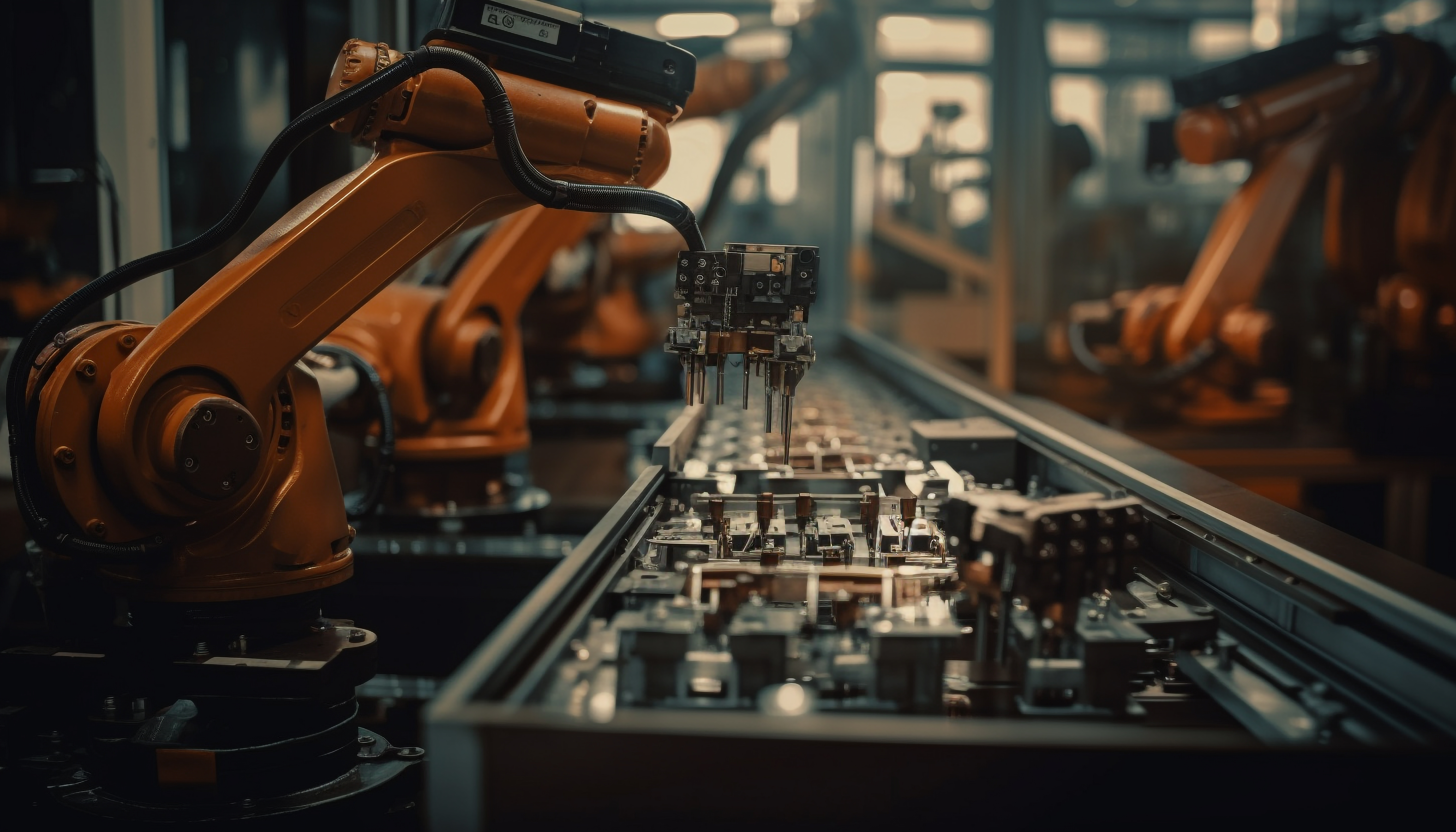
Despite decades of collecting terabytes of sensor, process, and quality data every day, most manufacturing floors still run on intuition rather than intelligence.
Manufacturing organizations have been collecting operational data for decades. Modern factories generate terabytes of sensor, process, and quality data every day. Yet our research across 80+ manufacturing clients finds that fewer than 15% have operationalized even basic predictive capabilities from this data.
The gap isn't technological — the tools exist, are mature, and are increasingly affordable. The gap is organizational. Most manufacturing organizations lack three things: unified data infrastructure, AI-literate operations teams, and governance frameworks that allow AI outputs to be trusted and acted upon.
Manufacturers that close this gap don't just cut costs — they compound advantage. Predictive maintenance, quality intelligence, and demand-responsive scheduling create a flywheel: better decisions generate better data, which improves the next decision.
Organizations that delay risk more than missed savings. Competitors who reach AI maturity first entrench operational advantages that are difficult to reverse — lower downtime, tighter margins, and operations teams who trust and act on machine-generated recommendations.
Most manufacturers have invested heavily in IoT, SCADA, and MES systems — the data exists, but is siloed and inconsistently governed.
Attempting broad operational AI rather than starting with the highest-cost, highest-frequency failure modes.
The best predictive model is worthless if the maintenance supervisor doesn't trust — or act on — its recommendation.
“Analytical capability and change capacity are typically the binding constraints, not infrastructure.”
Through our Dezaris AI Readiness Assessment, we evaluate manufacturing organizations across five dimensions: Data Infrastructure, Analytical Capability, Operating Model Alignment, Change Capacity, and Leadership Commitment. Programs that achieve scale start narrow, invest disproportionately in the human layer, and build for institutionalization from day one — answering 'who owns this after we leave?' before writing a line of code.
The gap we see on manufacturing floors isn't a technology gap — it's a readiness gap, and closing it means treating data infrastructure, analytical capability, and change capacity as a single program rather than three separate workstreams. The manufacturers still stuck at 15% operationalized AI aren't lacking tools; they're lacking the organizational scaffolding to trust and act on what those tools produce.
The organizations that will lead in manufacturing intelligence over the next decade aren't necessarily those that move first — they're those that move correctly. Readiness before investment. Foundation before scale.
“If your AI investment isn't paired with a readiness assessment, you're funding pilots that will never scale — talk to us before you write the next check.”
How Dezaris evaluates organizational readiness for AI at scale.
Secure committed sponsorship and clear ownership.
Assess the quality and accessibility of core data.
Confirm the platforms exist to operationalize AI.
Build the analytical skills teams need to act.
Earn frontline trust in AI-driven recommendations.
This framework underpins every engagement we run — hover a stage to trace how it connects to the next.
Explore other practices →