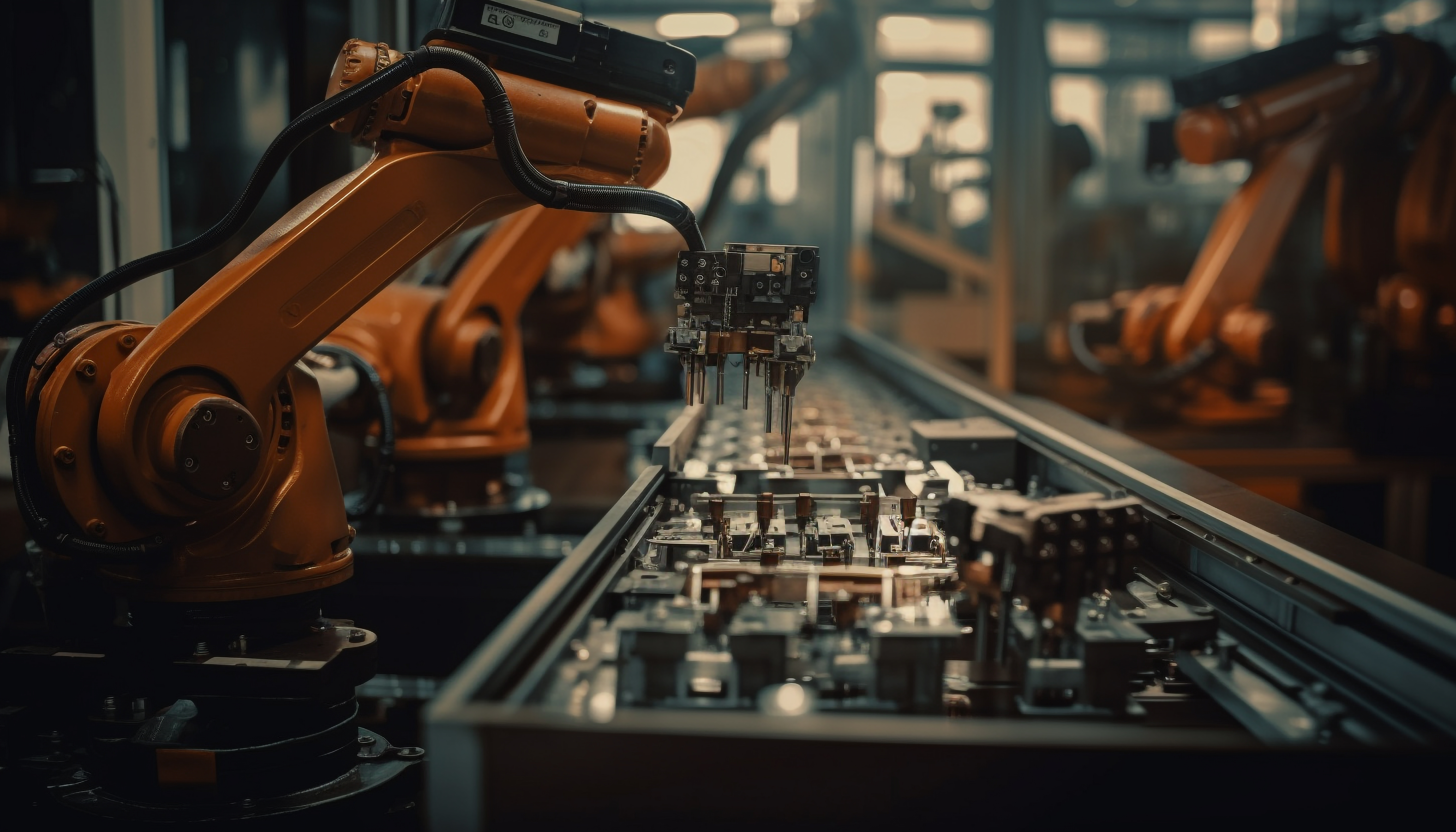
Manufacturing organizations that integrate AI and IoT intelligence into their operational excellence programs don't just accelerate the gains Lean identifies — they find performance improvement opportunities that process observation alone would never surface.
Manufacturing organizations have invested in operational excellence programs — Lean, Six Sigma, TPM — for decades. Many have reached the limits of what process discipline alone can achieve. The next layer of performance improvement requires a different input: real-time operational intelligence, predictive maintenance, and AI-augmented decision support at the shop floor level.
The challenge is that digital strategy and operational excellence are managed as separate programs in most organizations. The OE team owns the process. The IT team owns the technology. Neither team has the mandate or the capability to integrate them — and the most valuable gains live precisely in that integration.
Operational excellence is a cost and quality story that directly determines competitive position in manufacturing. Organizations that reach genuine operational excellence — not just process compliance, but intelligence-driven continuous improvement — operate with structurally lower costs, higher quality rates, and greater resilience to demand variability.
In a manufacturing environment where material costs, energy costs, and labor costs are under pressure, operational performance is one of the few levers that remains largely within the organization's control. AI-augmented operational excellence is how leading manufacturers are widening their performance advantage.
Digital transformation and operational excellence initiatives run in parallel without integration, each optimizing for its own metrics and missing the compounding gains that integration would deliver.
Organizations deploy IoT sensors and dashboards on top of processes that haven't been redesigned to use the intelligence they generate.
Programs measure IoT coverage, dashboard adoption, and data capture rates rather than the OEE, quality, and maintenance cost improvements that justify the investment.
“Lean tells you where the waste is. AI tells you why it's there and predicts when it will come back.”
The most effective operational excellence programs we work on integrate three disciplines: Lean process design, which provides the framework for waste elimination and continuous improvement; IoT and data infrastructure, which provides the real-time operational intelligence Lean principles can act on; and AI and analytics, which surface patterns invisible to observation and predict equipment and process failure before it occurs. Organizations that design these three as a single system, rather than three separate initiatives, achieve step-change performance improvement rather than incremental gains.
The ceiling on traditional operational excellence programs is real — and most mature manufacturing organizations have reached it. The next performance frontier requires intelligence: real-time data, predictive models, and AI-augmented decision support that transforms what continuous improvement teams can see, predict, and act on.
The organizations reaching that frontier are not the ones with the most advanced technology. They are the ones that integrated their Lean discipline with their digital strategy, built the data infrastructure before they needed it, and invested in building shop floor confidence in machine-generated recommendations before asking teams to act on them.
“If your operational excellence program has plateaued, the next layer of performance is in the intelligence layer — let's show you what's achievable.”
Our signature five-stage transformation methodology.
Diagnose readiness across people, process, and technology.
Align priorities to measurable business outcomes.
Translate strategy into a structured execution plan.
Stand up the platforms and capabilities required.
Drive adoption and compound value enterprise-wide.
This framework underpins every engagement we run — hover a stage to trace how it connects to the next.
Explore other practices →